
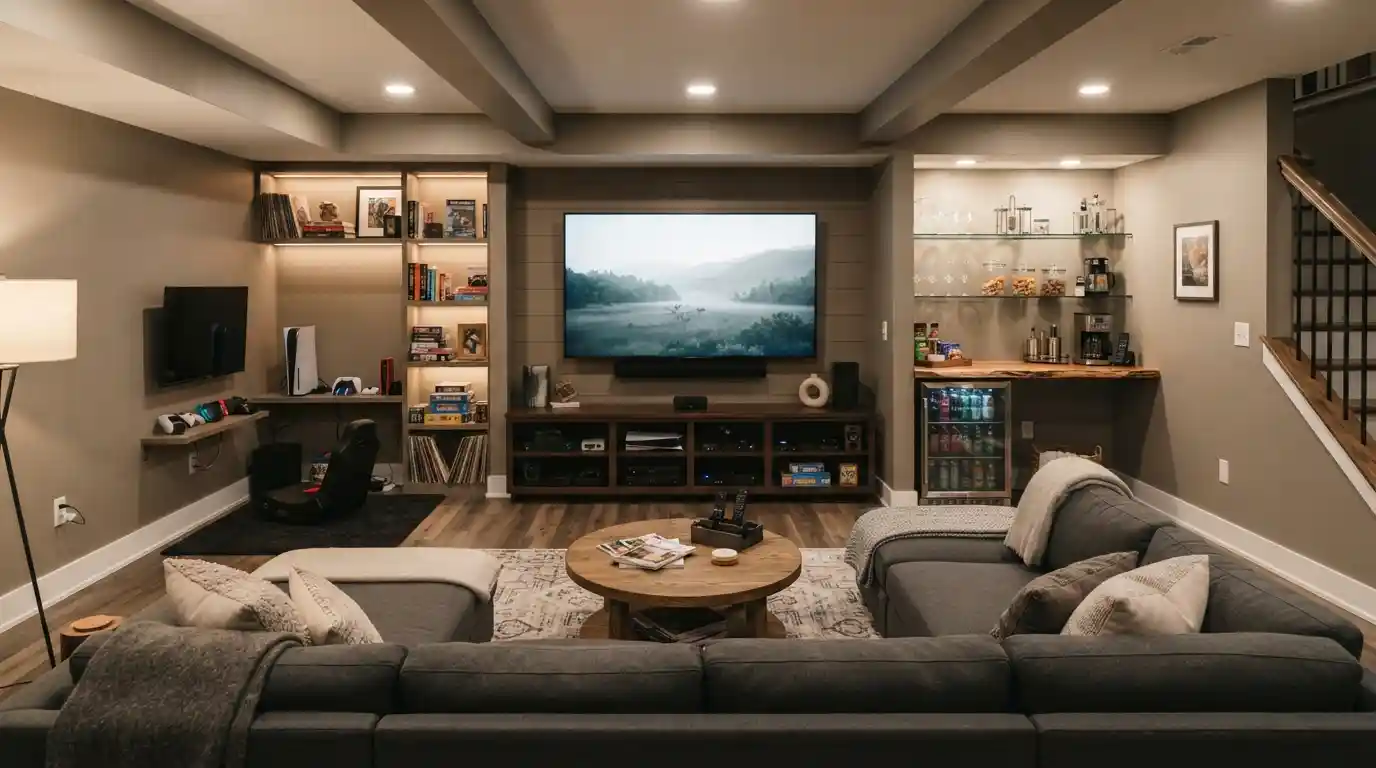
The best basement entertainment center ideas balance fun with everyday practicality. Instead of filling the room with equipment, start by deciding how you want to use the space and then build dedicated zones around those activities.
Whether you have a large finished basement or a smaller room with limited space, thoughtful planning can turn an underused area into an entertainment space that feels intentional, comfortable, and easy to enjoy.
What Makes a Great Basement Entertainment Center?
A successful basement entertainment center should bring several elements together without making the room feel crowded. The main components usually include a central screen, comfortable seating, organized storage, appropriate lighting, good sound, and enough open space for activities.
Your design should also reflect the people who will use the basement. A family entertainment room may need space for board games and children’s activities, while a dedicated media room may prioritize a large display, comfortable seating, and better sound control.
Before choosing furniture or electronics, consider creating a broader interior plan. These home decor ideas can help you think about color, furniture placement, storage, and overall functionality throughout the space.
1. Build a Dedicated Home Theater Area
One of the most popular basement entertainment center ideas is a dedicated home theater. Basements naturally lend themselves to movie viewing because they can provide a more controlled environment than rooms with large windows and changing daylight.
Start with the screen or television as the visual centerpiece. Arrange seating so viewers have a comfortable line of sight without blocking walkways. A large sectional can work well for families, while individual reclining seats may suit a more dedicated theater setup.
For smaller rooms, a wall-mounted television can save floor space. In a larger basement, a projector and screen can create a more cinematic experience.
Keep equipment organized rather than allowing streaming devices, gaming consoles, receivers, and cables to dominate the room. A properly designed media cabinet or built-in entertainment wall can keep technology accessible while maintaining a clean appearance.
2. Create a Multi-Purpose Entertainment Wall
If your basement needs to serve several purposes, consider creating one central entertainment wall instead of building separate furniture arrangements for every activity.
A multi-purpose wall might include a television, floating shelves, closed cabinets, gaming consoles, speakers, decorative objects, and concealed cable management. This approach creates a visual focal point while keeping the rest of the basement available for seating or games.
You can also use built-in storage around the screen for movies, controllers, board games, books, and accessories.
For inspiration beyond the basement, explore these smart home devices and consider which technology could make your entertainment setup more convenient.
3. Design a Dedicated Gaming Zone
A basement is an excellent location for a gaming area because it allows you to create a dedicated space without taking over the main living room.
For console gaming, position the television at a comfortable viewing height and provide enough seating for multiplayer sessions. A sectional, lounge chairs, or compact gaming seats can work depending on the room.
PC gamers may benefit from a separate desk with enough room for monitors, peripherals, headphones, and charging equipment. Keep wires organized with cable channels or under-desk management systems.
If your household enjoys different types of games, consider creating flexible gaming space instead of dedicating the entire room to one console or system. A table can support board games, card games, puzzles, or tabletop gaming when the television is not being used.
For another entertainment-focused idea, see the online gaming entertainment topic for additional inspiration around interactive entertainment.
4. Add an Arcade or Game Room Corner
If you want the basement to feel more playful, add a dedicated arcade corner. You do not need an entire room full of machines. One or two arcade cabinets, a pinball machine, or a classic game can create a strong focal point.
Other options include a foosball table, air hockey table, dartboard, or compact tabletop gaming station.
The important consideration is clearance. Game equipment needs enough surrounding space to be used comfortably without interfering with seating or walkways.
Keep the visual theme consistent. Retro artwork, framed game-inspired prints, shelving, and carefully selected accent lighting can create an arcade atmosphere without making the room feel cluttered.
5. Create a Comfortable Family Lounge
Not everyone will want to play games or watch movies all the time. A comfortable lounge area makes the basement useful for casual conversations, reading, relaxing, and family time.
Choose durable seating that can handle regular use. A sectional sofa can define the main lounge area while providing plenty of seating for guests.
Add a coffee table or movable ottomans for snacks and drinks. Area rugs can visually separate the lounge from gaming or entertainment zones while adding warmth to the basement.
For additional lifestyle inspiration, explore the broader luxury lifestyle trends covered by BizHorizone and adapt the ideas that fit your budget and home.
6. Upgrade the Audio Experience
Great entertainment is not only about the screen. Sound can dramatically affect how the room feels during movies, games, sports, and music sessions.
A simple setup may use a soundbar, while a larger entertainment center can accommodate a dedicated surround-sound system. Before installing speakers, think about seating positions and how sound will travel throughout the room.
Equipment should also have adequate ventilation. Avoid completely sealing electronic components into tight cabinets where heat cannot escape.
If you’re interested in upgrading the audio side of your entertainment setup, see the home audio technology guide for additional ideas.
7. Use Smart Lighting to Change the Atmosphere
Lighting can make the difference between a basement that feels like a storage area and one that feels like a finished entertainment destination.
Use multiple layers of lighting rather than relying on a single ceiling fixture. Recessed lighting can provide general illumination, wall lighting can add atmosphere, and accent lighting can highlight shelves or architectural features.
Smart lighting can make the room even more flexible. Bright lighting can be useful when cleaning or playing board games, while softer lighting can create a better atmosphere for movies.
For additional technology inspiration, explore smart ceiling technology and consider how connected home features can improve comfort in the space.
8. Add a Sports-Watching Zone
If your family enjoys watching sports, design the entertainment center around comfortable viewing and easy access to snacks and drinks.
A large television positioned where everyone can see it is usually the centerpiece. Arrange seating in a way that provides clear sightlines while keeping enough room for people to move around.
You can add sports-inspired artwork, team memorabilia, shelving, or framed photographs without overwhelming the room.
If your basement also has enough open floor area, consider adding a small recreation zone for activities such as tabletop games or indoor sports equipment.
For broader recreational inspiration, explore the sports and recreation center concept and adapt suitable ideas for a residential setting.
9. Add a Snack and Beverage Station
A basement entertainment room becomes considerably more convenient when snacks and drinks are close by.
A compact refreshment station can include a mini refrigerator, countertop, cabinets, shelving, and a small microwave. If you have more space, you could create a dedicated bar-style area with stools.
Keep food preparation simple unless the basement is designed for a full kitchen. The goal is convenience rather than duplicating every feature of the main kitchen.
Good storage is especially important. Closed cabinets can hide supplies when the room is being used as a family lounge rather than a party space.
10. Use Built-In Storage to Control Clutter
Entertainment equipment can quickly create clutter. Controllers, board games, cables, remote controls, DVDs, accessories, toys, and sports equipment all need somewhere to go.
Built-in cabinets are one solution, but freestanding shelving and storage benches can also work well. Use a mixture of open and closed storage so frequently used items remain accessible while less attractive equipment stays hidden.
Labeling storage containers can also make it easier for family members to put things away after movie nights and game sessions.
Keeping the basement organized is especially important when the same room serves several purposes. For more home-maintenance inspiration, see these home cleaning and organization ideas.
11. Make a Small Basement Feel Larger
You do not need a huge basement to create an effective entertainment center. Smaller spaces simply require more careful planning.
Choose furniture that matches the room’s dimensions rather than oversized pieces that restrict movement. Wall-mounted televisions can preserve floor space, while floating shelves can provide storage without making the room feel heavy.
Use a consistent color palette and avoid filling every available wall with decorations. A few carefully selected features often look better than a crowded collection of furniture and accessories.
Mirrors can also help reflect light and make a compact room feel more open, provided they are positioned appropriately.
12. Create a Dedicated Music and Entertainment Area
For households that enjoy music, the basement can become a flexible listening and entertainment lounge.
A quality speaker system, comfortable seating, record storage, and carefully controlled lighting can create a relaxed music environment. If you also use the room for movies and gaming, select equipment that can support multiple entertainment sources.
Music-related interests can also connect naturally with broader entertainment themes, including arts, entertainment, and music culture.
13. Add Movie-Themed Decor Without Overdoing It
A themed basement can be fun, but subtle details often produce a more polished result than covering every wall with movie posters.
Consider framed artwork, theater-style lighting, a simple display shelf, or a small collection of memorabilia. You could also create a dedicated display for favorite movies or entertainment collections.
If entertainment memorabilia is part of your design, explore the idea of classic entertainment autographs and collectibles for inspiration.
14. Create an Entertainment Center for Kids and Teens
A family basement can become a useful hangout for children and teenagers when the design provides several activities instead of focusing on only one screen.
Combine comfortable seating with a gaming area, board-game table, storage, and flexible floor space. Make charging stations easy to access while keeping cables organized.
Durable materials are important in high-use areas. Choose furniture and flooring that can tolerate frequent activity and are relatively easy to clean.
For more playful entertainment inspiration, the Ninja Entertainment concept demonstrates how activity-focused entertainment can create an energetic experience.
15. Improve Home Security and Equipment Protection
A basement entertainment center may contain televisions, gaming systems, computers, audio equipment, and other valuable electronics. Protecting the room should therefore be part of the planning process.
Use appropriate electrical protection for sensitive equipment and keep cables organized to reduce trip hazards. If the basement has windows or separate exterior access, consider how the overall home security system covers the area.
For additional security-related ideas, see the home security services topic.
16. Think About Comfort Before Technology
It is easy to spend most of the planning budget on televisions, gaming systems, speakers, and lighting while overlooking basic comfort.
Temperature control, ventilation, seating, flooring, and moisture management are equally important. A beautiful entertainment center will not be enjoyable if the basement becomes uncomfortable during long movie or gaming sessions.
Consider how air moves through the room and whether electronic equipment generates additional heat. Comfortable seating should also support the way people actually use the space.
Homeowners who rely on service plans for household systems may also find the discussion around home service plans useful when thinking about broader home maintenance.
17. Choose a Flexible Furniture Layout
The best basement entertainment centers can adapt when your needs change.
Instead of permanently dedicating every square foot to one activity, use movable furniture where practical. Lightweight chairs, ottomans, nesting tables, and modular seating can be rearranged for parties, movie nights, gaming sessions, or family activities.
Keep primary walking paths open and avoid placing large furniture where it prevents access to storage, mechanical systems, windows, or exits.
For additional interior inspiration, consider how lifestyle-focused home spaces can combine comfort, function, and visual appeal.
18. Create a Personal Entertainment Theme
Your basement does not have to look like a generic media room. Give it a personality that reflects your interests.
A sports fan might choose a clean sports-lounge theme. A movie enthusiast could create a subtle home theater atmosphere. Gamers might prefer a modern technology-focused design, while families may want a warm lounge with multiple activities.
The key is consistency. Choose a small number of colors, materials, and decorative elements and repeat them throughout the room.
Even a simple theme can make the space feel intentional rather than like a collection of unrelated entertainment equipment.
Basement Entertainment Center Planning Checklist
Before starting the project, review the following checklist:
- Decide the primary purpose of the basement.
- Measure the room before purchasing furniture or equipment.
- Plan the television or projector location first.
- Determine comfortable viewing distances and seating positions.
- Plan electrical outlets and cable routes.
- Choose appropriate lighting for movies, gaming, and general use.
- Include enough storage for controllers, games, cables, and accessories.
- Keep walkways and access areas clear.
- Plan ventilation around electronic equipment.
- Choose durable, easy-to-maintain furniture and finishes.
- Consider a snack or beverage station if space allows.
- Leave some flexible space for future entertainment changes.
Final Thoughts
The best basement entertainment center ideas are not necessarily the most expensive or technologically advanced. They are the ones that make the available space comfortable, functional, organized, and enjoyable for the people who use it.
Start with the room’s purpose, then build the entertainment layout around that purpose. Add the screen, seating, sound, lighting, storage, and recreational features in a way that preserves comfortable movement through the room.
Whether you want a home theater, gaming lounge, sports-watching room, family recreation area, or a combination of all four, a well-planned basement can become one of the most useful entertainment spaces in the home.



