Bathrooms are small, but their price tags are not. Tile, plumbing, fixtures, and skilled labor pack into a tiny footprint, which is why so many homeowners search for how to pull off a bathroom remodel on a budget without ending up with a room that looks cheap or fails early. The good news: bathrooms forgive tight budgets better than kitchens, as long as you save on the visible-and-swappable and splurge on the hidden-and-permanent. This guide shows you exactly where each dollar category belongs.
Note: cost figures are commonly reported U.S. planning ranges. Your local quotes will set the real total.
Bathroom Remodel on a Budget: What It Realistically Costs
A cosmetic refresh, meaning paint, a new vanity or refinished one, updated fixtures and lighting, a fresh mirror, and accessories, commonly lands between roughly $2,500 and $7,500 when much of the labor is DIY or the room is small. A midrange remodel with new tile, a new tub or shower, a toilet, and professional labor often runs between $8,000 and $20,000. Full gut renovations with layout changes, premium tile, and custom glass can pass $25,000 quickly.
Per-square-foot thinking helps: bathrooms cost more per foot than almost any room because every trade visits. Framing the project in tiers like this, the way our beginner budgeting guide recommends for any large expense, keeps expectations and savings goals in line.
Where to Save: The Smart Cuts
Keep the Layout Exactly Where It Is
Moving a toilet, tub, or shower drain is the most expensive decision in a bathroom. Keeping every fixture on its existing plumbing lines can save thousands in plumbing labor and permits. If the layout works, let it be.
Refinish Instead of Replacing the Tub
A structurally sound cast-iron or steel tub can be professionally refinished for a fraction of replacement cost, and it avoids the demolition and plumbing work a swap requires. The same logic applies to reglazing dated but solid tile.
Choose Fixtures and Tile Strategically
Large-format porcelain tile gives a modern, high-end look with fewer grout lines and often lower installed cost than small mosaics everywhere. Use premium tile only as an accent strip or in the shower niche, and let affordable field tile do the rest. For fixtures, midrange lines from major brands offer the same cartridge quality as designer labels; you are mostly paying for finishes and shapes.
Paint, Lighting, and Hardware
These are the cheapest transformations in the room. A quality moisture-resistant paint, a modern light fixture, new cabinet hardware, and a framed mirror can make a dated bathroom feel newly built for a few hundred dollars. The layering principles in our home decor ideas guide apply beautifully in small spaces.
Where to Splurge: The Do-Not-Cheap-Out List
Waterproofing
Behind pretty tile sits the system that decides whether your remodel lasts three years or thirty. Proper shower waterproofing membranes and correctly sloped pans are invisible and absolutely non-negotiable. Water damage behind walls is the most common and most expensive bathroom failure, and it starts with skipped waterproofing.
Plumbing and Ventilation
Quality valves and a properly sized, quiet exhaust fan protect everything else. A weak fan leaves moisture to feed mold and peel paint, quietly undoing your investment. If the budget forces a choice between a fancier faucet and a better fan, choose the fan every time.
Labor for Tile and Plumbing
These two trades are where skill shows. Crooked tile and marginal plumbing announce themselves daily and cost the most to redo. Vet installers carefully, using the reputation habits in our Triumph Home Services reviews, and be wary of bids that are dramatically below the pack.
A Sample Budget Breakdown
For a midrange, budget-conscious remodel, homeowners often see the money divide roughly like this:
- Labor: about 35 to 45 percent of the total.
- Tile and surfaces: about 15 to 20 percent.
- Vanity, toilet, and fixtures: about 15 to 20 percent.
- Tub or shower: about 10 to 15 percent.
- Lighting, fan, paint, and finishing: the remainder, plus a contingency of 10 to 15 percent for surprises.
Keeping that contingency intact until the walls are closed is the habit that separates calm projects from desperate ones, and holding a broader reserve follows the same logic as our emergency fund guide.
DIY: What to Do Yourself and What to Hire Out
Confident DIYers can safely handle demolition, painting, installing a vanity and toilet on existing connections, swapping light fixtures and hardware, and caulking. Those tasks can remove a meaningful share of labor cost. Tile in a wet area, any plumbing relocation, and electrical changes belong with licensed professionals in most jurisdictions, and errors there multiply costs rather than saving them.
A popular hybrid is to hire the shower and tile work professionally while doing everything else yourself in stages. The bathroom improves in visible steps, and spreading purchases across months softens the financial hit. Some homeowners also protect the surrounding home investment with coverage reviews like those in our insurance protection overview, since a renovated bathroom can nudge replacement value upward.
Timing, Shopping, and Small Tricks That Add Up
Buy fixtures during major holiday sales and ask about open-box or floor-model vanities at local showrooms. Choose a standard-size vanity and tub so nothing requires custom fabrication. Keep one full box of your tile stored afterward for future repairs; matching discontinued tile later is nearly impossible. And schedule the work when you can spare the bathroom, because rushing trades costs more than patience.
When the dust settles, protect the result with a regular cleaning rhythm, whether your own or through services like those in our Happy Home Cleaning Services feature, since grout and fixtures stay new-looking far longer with consistent care. Homeowners weighing the remodel against a future sale will also find useful context in our Aweigh Real Estate guide and the neighborhood calibration in our Kleven Real Estate guide, because bathrooms, like kitchens, punch above their size in buyer impressions. Those carrying bundled home coverage can also check whether any related repairs fall under plans like the Constellation home service plans.
A Realistic Example: The $6,000 Refresh
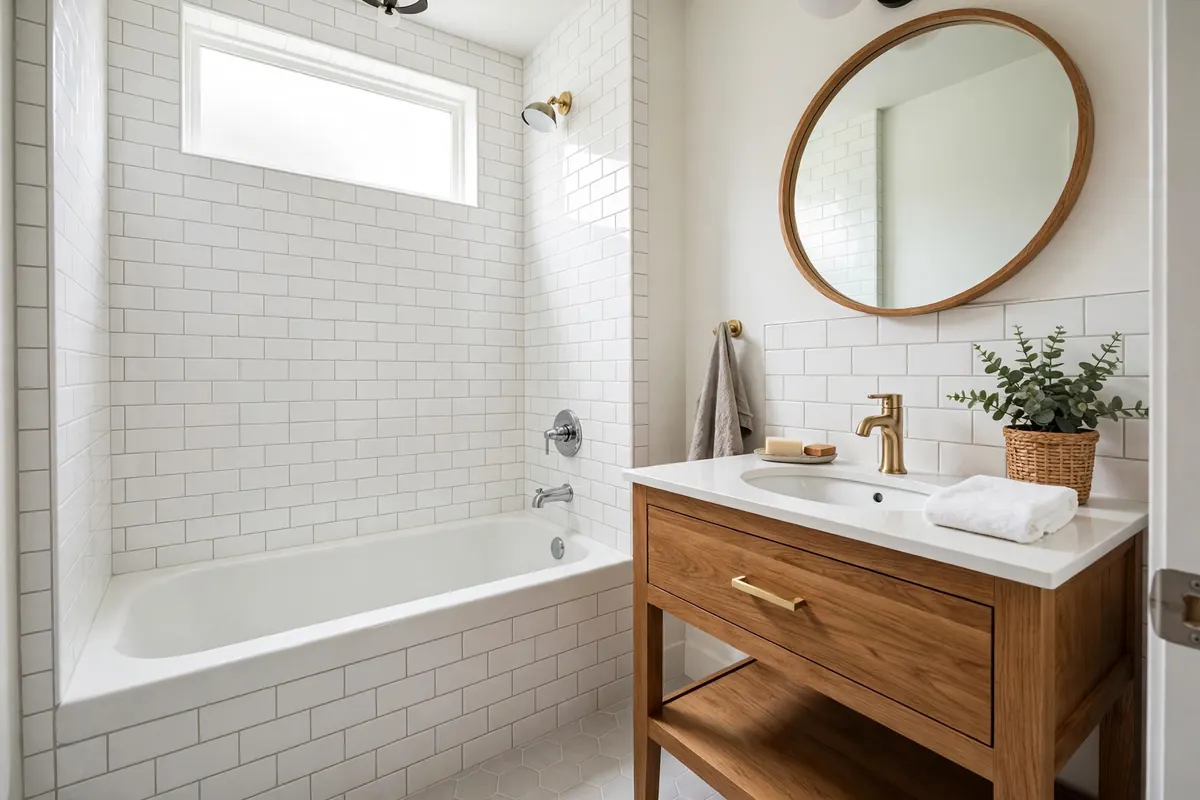
To make the tiers concrete, picture a typical budget project in a mid-sized home. The owners kept the layout and the tub, which was refinished instead of replaced. They chose large-format porcelain tile for the floor and shower walls, a standard-size vanity bought on sale, a new toilet, midrange faucets, a strong quiet fan, fresh paint, and a framed mirror with new lighting. A licensed plumber handled the valve and drain connections, and a tile setter did the wet area, while the owners demolished, painted, and installed the vanity and accessories themselves.
The result looks and feels like a far more expensive remodel, because the money went where eyes and hands land daily: tile, vanity, lighting, and fixtures. Just as importantly, the invisible spending was protected: full waterproofing behind the shower tile and a fan that actually clears the mirror. Owners researching whether this level of spend suits their street often cross-check with the property data habits in our PropertyRecs real estate tools overview before committing, which is a sensible final gut-check for any budget.
Mistakes That Waste the Most Money
- Skipping waterproofing to afford prettier tile: the classic false economy.
- Changing the layout late, after plumbing work has begun.
- Ordering custom sizes when standard sizes would look identical.
- Ignoring the fan, then repainting mold-stained ceilings within two years.
- Spending the contingency on upgrades before the walls are closed and the unknowns are known.
Frequently Asked Questions
What is the cheapest way to update a bathroom?
Paint, lighting, hardware, a framed mirror, and a refinished tub or new vanity top transform the room for the least money. Done together, they can make a bathroom feel new for a few thousand dollars or less.
How long does a budget bathroom remodel take?
A cosmetic refresh can take a long weekend to a week. A midrange remodel with tile and plumbing typically runs two to four weeks, depending on curing times and inspection schedules.
Does a bathroom remodel add home value?
Midrange bathroom remodels are consistently among the more reliable home improvements for resale value, particularly when the result matches the neighborhood standard. Exact returns vary by market.
Can I remodel in stages?
Yes, and it is a smart budget strategy. Do the hidden work and shower first, then surfaces and fixtures as funds allow, keeping a consistent design plan so the stages blend.
Finally, photograph the finished room in daylight before you call it done. Small grout gaps, paint misses, and a slow drip under the vanity are easiest to spot, and cheapest to fix, while your contractors are still engaged and the receipts are still on the counter.
The Bottom Line
A bathroom remodel on a budget succeeds by splitting decisions into two lists: save on layout changes, refinishing, and strategic materials; splurge on waterproofing, ventilation, and the trades whose work hides behind walls. Follow that split, hold your contingency, and you will get a bathroom that looks premium, works properly, and stays that way for years.