Ask a room full of homeowners what a kitchen renovation costs and you will hear numbers from a few thousand dollars to the price of a luxury car. Both can be true. Understanding the average kitchen remodel cost means understanding where the money actually goes, because the breakdown, not the headline, tells you how to control your own project. This guide walks through typical U.S. ranges, the major cost categories, and the decisions that move the total most.
Note: figures are commonly reported U.S. planning ranges. Local labor rates and your choices will set the real number, so use them to build a budget, not to predict a quote.
The Average Kitchen Remodel Cost, by Project Size
Most remodels fall into three broad tiers:
- Minor refresh: keeping the layout, repainting or refacing cabinets, new hardware, lighting, and a modest countertop or appliance swap. Many homeowners report totals roughly between $10,000 and $25,000.
- Midrange remodel: new stock or semi-custom cabinets, new countertops, appliances, flooring, and updated lighting in the same footprint. Commonly reported totals often land between $25,000 and $65,000.
- Major or upscale remodel: layout changes, custom cabinetry, premium appliances and stone, and structural or electrical work. Totals frequently run from $65,000 to well past $130,000.
These swings explain why “average” is a slippery word. A useful anchor is cost per square foot and, more importantly, the category breakdown below. Budgeting in categories is the same discipline recommended in our beginner budgeting guide.
Where the Money Actually Goes
Cabinets: The Biggest Line Item
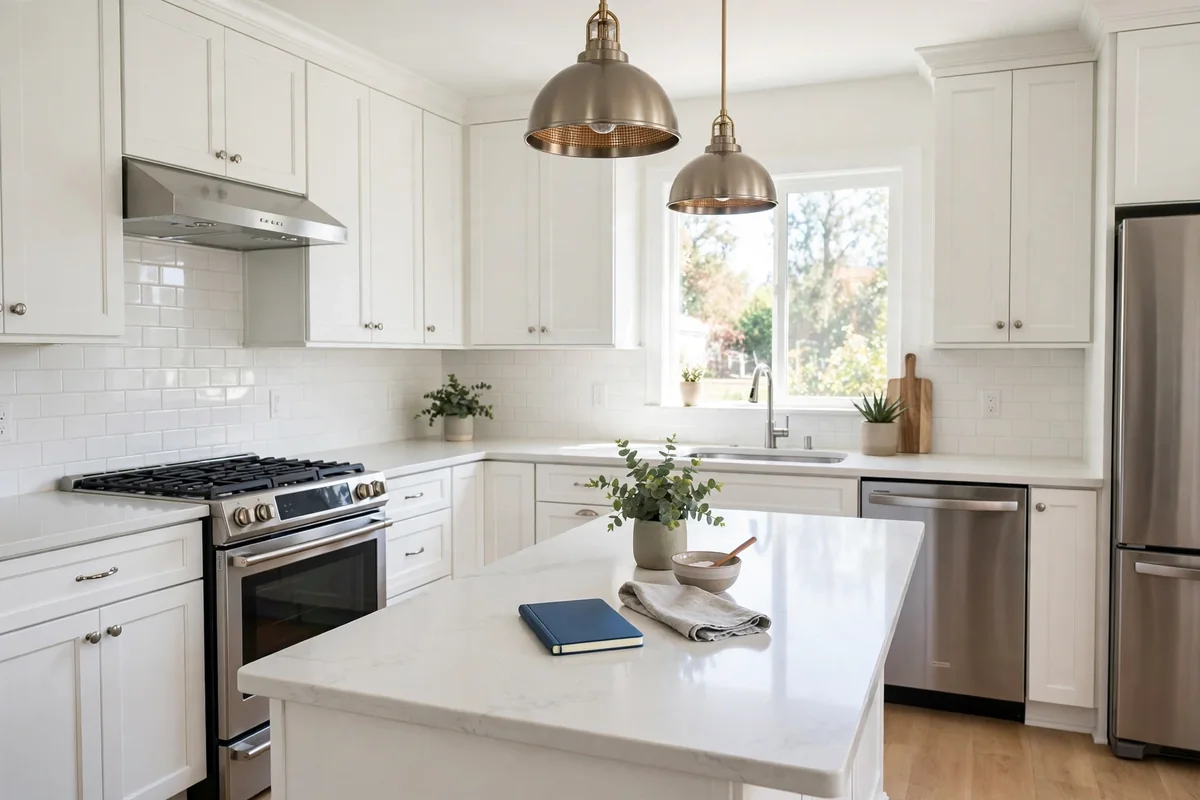
Cabinets commonly consume roughly a quarter to a third of a midrange budget, sometimes more with custom work. Stock cabinets cost least, semi-custom adds sizing and finish flexibility, and full custom is a premium choice. Refacing sound cabinet boxes instead of replacing them is the classic saver here, often cutting the cabinet bill substantially while looking nearly new.
Labor: The Quiet Giant
Labor frequently accounts for a fifth to a third of the total, covering demolition, carpentry, plumbing, electrical, tiling, and installation. Layout changes multiply labor because plumbing and wiring move with the sink and appliances. Keeping the same footprint is the single most powerful cost decision in most remodels. Vet your contractor the way our Triumph Home Services reviews advise for any major home pro: references, insurance, and a written, itemized scope.
Countertops
Countertops typically take around a tenth of the budget. Laminate and butcher block sit at the affordable end, quartz and granite in the middle, and exotic stone or ultra-compact surfaces at the top. Edge profiles, cutouts, and seams add fabrication cost, so simpler shapes save money quietly.
Appliances
Appliance packages range from a few thousand dollars for reliable mainstream sets to five figures for professional-style ranges and built-in refrigeration. Reusing one or two good existing appliances can trim this category without affecting the finished look much.
Flooring, Lighting, and the Rest
Flooring, lighting, plumbing fixtures, paint, and hardware usually split the remaining budget. Individually modest, together they are significant, and they are where small upgrades, like layered lighting, deliver an outsized share of the “wow” for the money. The styling principles in our home decor ideas guide are worth reviewing before you finalize these choices.
Hidden Costs That Surprise Homeowners
Almost every remodel meets something unexpected: water damage under the sink, outdated wiring that must be brought to code, or subfloor repairs. A contingency of 10 to 20 percent of the budget is standard advice for a reason. Permits, dumpster fees, and temporary kitchen arrangements, such as a microwave-and-hotplate corner or more takeout than usual, also belong in the plan.
Financing deserves the same clear eyes: know the true cost of any loan or credit used, and stage savings where you can, an approach our emergency fund guide complements for the unexpected parts. Also notify your insurer about a major renovation, since a significantly upgraded kitchen can change your home’s replacement value, as the coverage thinking in our insurance protection overview outlines.
Does a Kitchen Remodel Pay Back at Resale?
Kitchens sell homes, and minor to midrange remodels are frequently cited among the better-returning home projects, often recovering a substantial share of their cost at resale, while ultra-luxury remodels typically recover a smaller share. Exact percentages vary by market and year, so treat anyone promising a precise return with suspicion.
The surer logic is local: match your kitchen to your neighborhood’s standard. Overbuilding for the street rarely pays, while bringing a dated kitchen up to par protects value, a principle echoed in the property analysis of our Aweigh Real Estate guide and the market tools in our PropertyRecs tools overview. Broader housing dynamics, covered in our explainer on the policy shift that could change the U.S. housing crisis, shape how far any renovation premium goes.
Smart Ways to Save Without Regrets
- Keep the layout. Moving plumbing and gas lines is where budgets quietly double.
- Reface or paint cabinets when the boxes are solid, and spend the savings on counters and lighting.
- Mix price tiers: splurge on the faucet you touch daily, choose midrange where eyes rarely land.
- Do your own demo and painting if you are handy, leaving skilled trades to professionals.
- Shop appliance packages during holiday sales and ask about floor models.
- Protect the finished result with regular care, the way scheduled cleaning from services like those in our Happy Home Cleaning Services feature preserves a new kitchen’s shine.
Homeowners who already carry service relationships sometimes coordinate remodel timing with plan visits, as described in our overview of Constellation home service plans, and the neighborhood context in our Kleven Real Estate guide helps calibrate how far to take the upgrade.
Planning the Project: Decisions in the Right Order
Remodels go over budget most often through sequence, not splurges. The order that keeps control is simple: measure and design first, choose cabinets and appliances before finalizing the design, and order long-lead items early so the schedule is not held hostage by a backordered range. Every change made on paper costs almost nothing; the same change made after demolition costs real money, which is why patient planning weeks are the cheapest weeks of the whole project.
Get the contract right before work starts. It should include an itemized scope, named materials or allowances for each category, a payment schedule tied to completed milestones, and a written process for change orders. Allowances deserve special attention: if the contract includes a modest allowance for tile or lighting but your taste runs premium, the overage appears mid-project when options feel limited. Set allowances from real products you have actually priced, not from optimistic placeholders.
Finally, plan daily life around the work. Decide where the temporary kitchen will live, how pets and children will be kept out of the work zone, and which decisions truly need same-day answers from you. Homeowners who prepare this way consistently report the same thing in hindsight: the remodel was disruptive, yes, but it never felt out of control, and the budget they set at the start was recognizably the budget they finished with.
Frequently Asked Questions
How long does a kitchen remodel take?
A minor refresh may take one to three weeks of work. Midrange remodels commonly run four to eight weeks, and major renovations with layout changes can take two to three months or more, depending on permits and material lead times.
What is the most expensive part of a kitchen remodel?
Cabinets are usually the largest single category, followed closely by labor. Premium appliances can overtake both in upscale projects.
Can I remodel a kitchen for under $10,000?
Yes, as a cosmetic refresh: paint or reface cabinets, new hardware, a modest countertop or backsplash, updated lighting, and one appliance at a time. Structural changes and full cabinet replacement will not fit that budget in most markets.
Should I move out during the remodel?
Most people stay, setting up a temporary kitchen corner. If the project includes major structural work or you have health sensitivities to dust, a short stay elsewhere can be worth it.
One more word on timing: material lead times swing with demand, and popular cabinet lines and appliances can take weeks or months to arrive. Starting design conversations a season before your target start date is not over-cautious; it is how experienced homeowners protect both their schedule and their budget from the most common remodel delays.
And remember that none of these numbers need to be faced alone: a good contractor will happily remodel in stages, refreshing cabinets and surfaces now and upgrading appliances later, so the kitchen improves steadily without one overwhelming bill.
The Bottom Line
The average kitchen remodel cost is really five budgets in a trench coat: cabinets, labor, countertops, appliances, and everything else. So decide your tier honestly and early, keep the layout if you can, hold a contingency, and spend where hands and eyes land every day. Do that, and the final invoice will feel like a plan you executed, not a nasty surprise that simply happened to you.