Your water heater rarely picks a convenient moment to quit. One morning the shower runs cold, the tank starts rumbling, or you find a puddle spreading across the garage floor. At that point, the first question on your mind is simple: what will the water heater replacement cost be, and how fast can it happen? This guide walks through the real factors that shape your final bill, the warning signs that replacement beats repair, and the smart ways American homeowners keep the project affordable.
Average Water Heater Replacement Cost in the USA
For most households, the total water heater replacement cost lands somewhere between a manageable four-figure bill and a surprisingly large one, depending on the type of unit you choose. A standard tank-style water heater is the most affordable route. The unit itself is relatively inexpensive, and installation is straightforward when the new tank matches the old one’s size, fuel type, and venting.
Tankless water heaters cost more upfront. The equipment is pricier, and installation often involves new gas lines, upgraded venting, or electrical work. However, tankless models heat water only when you need it, which can trim energy bills and free up floor space. Over a long ownership period, that efficiency can offset part of the higher purchase price.
Capacity also matters. A 40-gallon tank suits many smaller homes, while larger families often need 50 gallons or more. Bigger tanks cost more to buy and more to run. Fuel type plays a role too. Electric models are usually cheaper to install, while gas models may need venting checks and gas line inspections that add labor time.
What Is Included in a Typical Quote?
A complete quote usually covers the new unit, removal and disposal of the old tank, basic hookups, and permits where your city requires them. It may not cover extras like a new expansion tank, a drain pan, a water shut-off valve replacement, or code upgrades. Always ask the installer to itemize the quote so you can compare bids fairly. A low headline price sometimes hides several add-ons that appear later.
Clear Signs It Is Time to Replace Your Water Heater
Repairing a young water heater often makes sense. Replacing an aging one usually saves money in the long run. Watch for these warning signs:
- Age: Most tank water heaters last roughly 8 to 12 years. If yours is past that range and misbehaving, replacement is usually the wiser investment.
- Rusty or discolored water: Rusty hot water often means the inside of the tank is corroding.
- Leaks around the base: A leaking tank cannot be repaired reliably. The tank itself has failed.
- Strange noises: Loud rumbling or popping suggests hardened sediment, which strains the tank and wastes energy.
- Inconsistent temperatures: Showers that swing from hot to lukewarm signal a struggling heating element or burner.
- Rising energy bills: An inefficient older unit works harder every year, and your utility bill shows it.
If two or more of these signs show up together, start pricing a replacement rather than paying for another short-term fix. Money set aside in advance makes the decision far easier, which is why building an emergency fund for home repairs is such a smart habit for homeowners.
Factors That Raise or Lower Your Final Bill
Unit Type and Size
As noted above, tankless systems cost more to buy and install than traditional tanks. High-efficiency models with better insulation or smart controls also carry a premium. Choosing the right size matters just as much as the type. An oversized tank wastes energy every single day, while an undersized one leaves someone with a cold shower.
Labor and Location
Labor rates vary widely across the United States. A replacement in a major city typically costs more than the same job in a rural area. Access matters too. A tank in an open garage installs quickly. A tank wedged into a tight attic or crawl space adds hours to the job. Reputable local pros, like the teams described in this overview of air conditioning repair services in Shelby, tend to price transparently and explain each line item before work begins.
Permits and Code Upgrades
Many cities require a permit and inspection for water heater replacement. Older homes sometimes need upgrades to meet current code, such as seismic strapping in earthquake-prone states, new venting, or a pressure relief valve line. These items add cost, but they also protect your home and your insurance coverage. Skipping permits to save money can backfire badly when you sell the house.
Fuel Conversion
Switching from electric to gas, or the other way around, is the single biggest cost multiplier. New gas lines, vents, or electrical circuits can add a substantial amount to the project. Most homeowners save money by replacing like with like unless they have a strong reason to convert.
Repair vs. Replacement: How to Decide
A common rule of thumb is to compare the repair quote with the age of the unit. If the repair costs more than half the price of a new unit and the heater is over eight years old, replacement usually wins. A new unit brings a fresh warranty, better efficiency, and several worry-free years. On the other hand, a five-year-old tank with a failed heating element is an easy repair.
Home service plans can soften the blow either way. As explained in this breakdown of Constellation home service plans, a plan may cover part of a repair or replacement for major systems. Before you buy any plan, read the coverage limits carefully, and check homeowner reviews like these Triumph Home Services reviews to see how a provider actually treats customers when something breaks.
How to Keep Your Water Heater Replacement Cost Down
You cannot avoid the expense forever, but you can control it:
- Get at least three quotes. Prices for identical work vary more than most people expect.
- Replace on your schedule, not in an emergency. A planned replacement lets you shop around; a flooded garage does not.
- Ask about rebates. Utility companies and manufacturers sometimes offer rebates on high-efficiency models.
- Keep the same size and fuel type. Like-for-like swaps are the cheapest installs.
- Maintain the new unit. Flushing the tank once a year limits sediment and extends its life.
Budgeting ahead also helps. A simple monthly plan, like the approach in this guide on how to budget for household goals, can build a home-maintenance cushion so a dead water heater never becomes a financial crisis. Some homeowners prefer to park that cushion in a money market account rather than a regular savings account so it earns a little more while it waits. Others ladder savings into deposits after comparing the best CD rates for 2026, timing maturities around big expected projects.
What to Expect on Installation Day
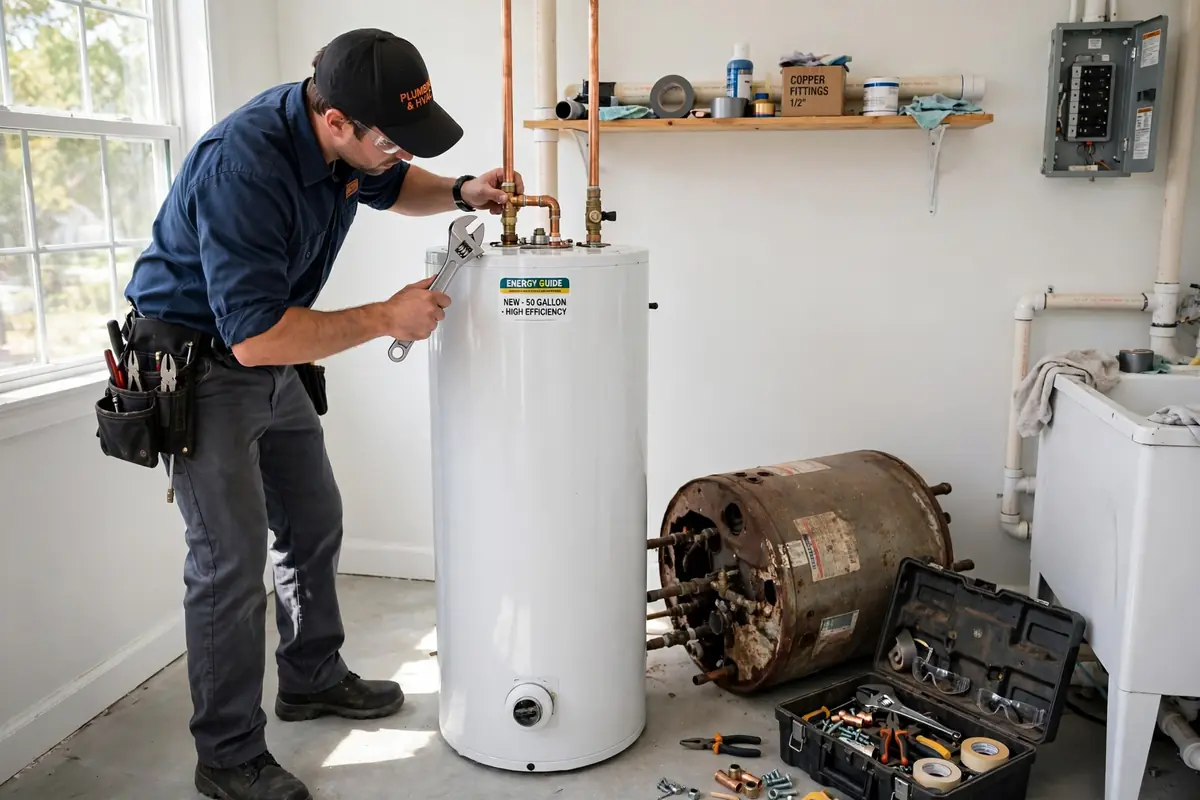
Most like-for-like replacements take two to four hours. The installer shuts off water and power or gas, drains the old tank, disconnects it, and hauls it away. The new tank goes in, connections are sealed and tested, and the installer fills the tank before turning the power back on. That last detail matters: powering an empty electric tank can burn out the elements instantly.
Before the crew leaves, confirm the temperature setting. Around 120 degrees Fahrenheit is the commonly recommended setting for balancing comfort, safety, and efficiency. Also ask where the shut-off valve is and how to drain the tank for future maintenance. While you are thinking about whole-home upkeep, regular tasks like scheduling professional home cleaning services and testing your home security services keep the rest of the house in the same good shape as your new water heater.
Tank vs. Tankless: Comparing Costs Over Ten Years
Upfront price is only part of the story. A traditional tank heater is cheaper to buy and install, but it keeps a full tank of water hot around the clock, which uses energy even when nobody is showering. A tankless unit costs more on day one, yet it typically lasts longer — often several years beyond a tank model — and avoids those standby losses. Over a decade of ownership, many households find the total costs land closer than the sticker prices suggest, especially in homes with high hot water demand.
Your household’s habits decide the winner. A large family that runs showers, laundry, and a dishwasher in overlapping waves may overwhelm a single tankless unit or drain a tank quickly, making capacity the priority either way. A couple in a small home may see the clearest savings from tankless efficiency. Ask each installer to quote both options for your home, with the same warranty terms, and compare the ten-year picture — equipment, installation, expected lifespan, and estimated energy use — rather than choosing on the installation-day price alone. Also factor in maintenance: tankless units need periodic descaling in hard-water areas, a small recurring cost that belongs in an honest comparison.
Frequently Asked Questions
How long does a water heater replacement take?
A straightforward swap usually takes two to four hours. Jobs that involve relocation, fuel conversion, or code upgrades can take a full day or longer.
Can I install a water heater myself?
Handy homeowners sometimes do, but gas lines, venting, electrical work, and permit rules make this a risky DIY project. A mistake with gas or carbon monoxide is dangerous, and many manufacturers require professional installation to keep the warranty valid.
Should I choose tank or tankless?
Choose a tank unit for the lowest upfront cost and a simple install. Choose tankless for endless hot water, lower standby energy use, and a longer lifespan, if your budget allows the higher installation cost. Regional service guides, such as these air conditioning repair tips for Somerset homes, show how much local climate and housing stock shape these home-system decisions.
The Bottom Line
The true water heater replacement cost depends on the unit you pick, the fuel you use, and how much extra work your home needs. Watch for age, rust, leaks, and noise, and act before a small problem becomes a flood. Get several itemized quotes, consider a service plan for future protection, and keep a repair fund ready. Do that, and a failed water heater becomes an inconvenience instead of an emergency.