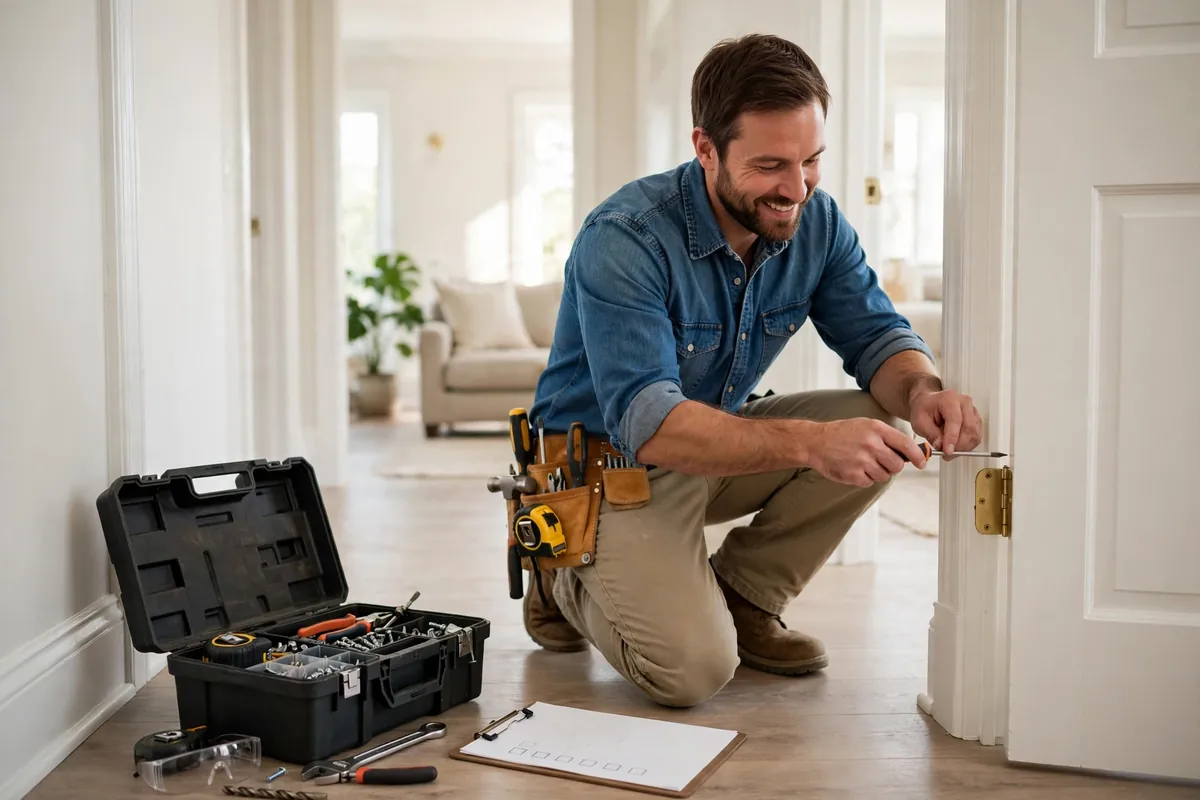
Every homeowner keeps a mental list: the dripping faucet, the sticking door, the drywall ding, the ceiling fan that wobbles. Individually they are too small for a specialist, collectively they are exactly a handyman’s job, if you can find a good one. Knowing how to find a good handyman you can actually trust turns that nagging, ever-growing list of small repairs into a single satisfying, productive visit with one trusted professional. This guide covers where to look, how to vet, what fair pricing looks like, and the warning signs to avoid.
What a Handyman Can and Cannot Do
A skilled handyman handles the small and medium jobs of home life: minor plumbing fixes like faucets and toilet parts, drywall patching, painting, tile regrouting, furniture assembly, mounting TVs and shelves, replacing light fixtures and fans, caulking, weatherstripping, and dozens of similar tasks. One visit can clear a list that would take you four weekends.
Know the limits, though. Work that legally requires a licensed trade, such as new electrical circuits, gas lines, major plumbing, structural changes, and HVAC refrigerant work, belongs with licensed specialists. Rules vary by state and by the dollar value of the job. A trustworthy handyman tells you plainly when a job is beyond their license and refers you onward; that honesty is itself a trust signal. For bigger system work, homeowners use dedicated providers like the Shelby air conditioning team rather than a generalist, and vetted cleaning help from services in our Happy Home Cleaning Services feature follows the same hiring logic.
How to Find a Good Handyman: Where to Look
The best source is referrals from people whose homes you have seen. Neighbors, coworkers, and local community groups can tell you who shows up when promised and whose repairs last. Local hardware stores often keep informal lists of reliable regulars, and real estate agents are an underrated source because they use handymen constantly to prepare homes for sale.
Online platforms and neighborhood apps add convenience and reviews, though quality varies and top-rated pros book out quickly. Whichever channel you use, apply the same vetting you would for any home service, the way customers describe their best experiences in our Triumph Home Services reviews. Homeowners with bundled coverage can also ask whether any tasks fall under existing plans like the Constellation home service plans, while those preparing a home for market often find candidates through the property networks in our Aweigh Real Estate guide.
Vetting: The Checks That Predict Reliability
Reviews With Patterns, Not Just Stars
Read the words, not just the rating. Repeated mentions of punctuality, tidiness, and fair pricing predict your experience. Repeated mentions of rescheduling or sloppy finishes predict that too.
Insurance and Basic Professionalism
Ask whether they carry liability insurance. Many excellent solo handymen do, and those who do will say so quickly. Our small business insurance guide explains why that coverage protects you if an accident happens on a job. Professional signals also include a real business name, a written quote, and clear communication about scheduling.
A Small First Job
Test with two or three list items before handing over anything bigger. You will learn how they price, how they protect floors and furniture, and whether they clean up. It is the lowest-risk audition there is.
How Handyman Pricing Works
Most handymen charge by the hour, commonly in a broad range around $50 to $100 per hour in many U.S. markets, by the half or full day at a bundled rate, or per task from a price list for common jobs. Minimum charges of one to two hours are normal, which is why batching your list into one visit is the smartest money move in this entire guide: ten small fixes in one trip cost far less than ten separate call-outs.
Ask how materials are handled: whether you should buy parts in advance, whether they shop on your time, and how receipts are shared. Clear answers upfront prevent the only arguments that typically occur in handyman relationships. Households that fold these visits into a yearly maintenance rhythm usually budget for them using the planning style in our beginner budgeting guide, with reserves from our emergency fund guide covering the surprises a good handyman occasionally uncovers, like water damage behind a loose tile.
Before, During, and After the Visit
Prepare a written list with photos for anything subtle, and walk it together at the start so priorities are clear if time runs short. Agree on what “done” looks like for each item. During the visit, a good handyman flags anything unexpected before fixing it and names the added cost before proceeding, not after.
Afterward, walk the list together, test what was repaired, and pay as agreed. If something fails within a reasonable window, a trustworthy pro returns and makes it right; ask about that policy in advance. For any disagreement that cannot be resolved directly, clear written agreements are your protection, and community legal resources like those in our Maxwell Street Legal Clinic guide can explain options. Most homeowners also think about access and security for any regular home helper, applying the common-sense practices in our home security services guide.
Handyman vs. Specialist: A Quick Decision Guide
When a job appears, one question decides who to call: does it require a license, a permit, or a single trade’s deep expertise? Replacing a garbage disposal, patching drywall, hanging doors, mounting a TV, regrouting a shower, assembling furniture, and fixing a running toilet all sit comfortably in handyman territory. A new circuit, a moved drain line, a gas appliance hookup, a roof repair beyond a stray shingle, or a furnace problem does not, and each deserves its licensed specialist.
Cost follows the same logic. A specialist’s minimum charge for one small task often exceeds a handyman’s hourly rate, which is why specialists earn their fee on depth, not breadth. Smart homeowners keep both numbers in their phone: the handyman for the list, and one trusted plumber, electrician, and HVAC company for the systems. When a handyman visit uncovers a specialist-level issue, nothing is lost: you have a clear diagnosis, photos, and a professional opinion to hand over, which usually makes the specialist’s visit faster and cheaper too.
Red Flags Worth Heeding
- Cash-only with no invoice or written quote of any kind.
- Vague pricing that cannot be explained before work begins.
- Refusal to discuss insurance or to name past customers.
- Pressure to expand the job dramatically beyond your list without clear evidence.
- Chronic lateness and ghosting before the relationship even starts.
- Offering to do licensed trade work they are not licensed for, at a suspicious discount.
None of these require confrontation; simply hire someone else. The market for good handymen rewards patience, since the reliable ones are usually booked a week or two out, and that waiting list is itself evidence of quality.
Building a Long-Term Relationship
Find a good one and keep them. Homeowners with a trusted handyman on speed dial handle repairs earlier, when they are cheap, keep their homes in visibly better shape, and skip the stress of re-vetting strangers for every small job. Be the customer pros love to return to: keep a prepared list, pay promptly, communicate clearly, and leave an honest review. Scheduling a standing visit two or three times a year to clear the accumulated list is the habit that quietly separates well-kept homes from slowly declining ones.
Frequently Asked Questions
How far in advance should I book?
Good handymen commonly book one to three weeks out for non-urgent lists. True emergencies are the exception; most will try to fit in a leak or a broken lock sooner for existing customers.
Should I buy materials myself?
For visible items like faucets, fans, and hardware, buying your chosen model in advance is smart and avoids taste mismatches. For consumables and standard parts, let the handyman supply them and show receipts.
Is it okay to ask for a fixed price instead of hourly?
Yes, for well-defined tasks. For open-ended lists, hourly with a not-to-exceed estimate agreed in advance is a fair middle ground.
What if my handyman finds a bigger problem?
Ask for photos, an explanation, and a separate quote or a referral to a licensed specialist. A trustworthy response sounds like information, not pressure.
One small habit makes every future visit smoother: keep a running note on your phone, adding each small repair the moment you notice it, with a photo where it helps. By the time the list reaches eight or ten items, you have a perfect, ready-made booking, and nothing in the house stays broken long enough to become a bigger, pricier problem.
The Bottom Line
Learning how to find a good handyman comes down to referrals, pattern-based reviews, insurance, and a small test job. Batch your list, agree pricing in writing, and treat the relationship as a long-term one. Do that once, and the dripping, sticking, wobbling list stops being a source of guilt and becomes a single quick phone call.
That peace of mind is priceless.