
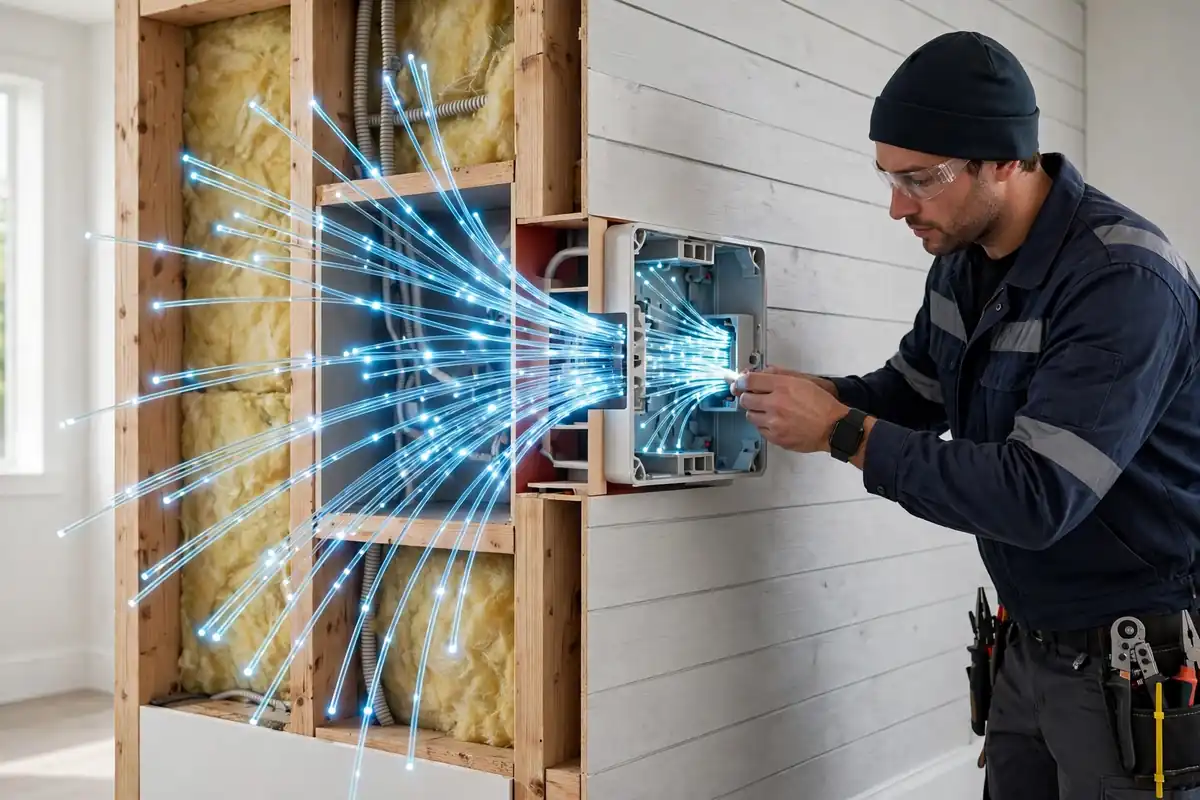
If an internet provider has told you fiber is coming to your street, or a neighbor swears it changed their work-from-home life, you may be asking what is fiber internet and whether it is really different from the cable you already have. It is different, in ways you can feel: fiber carries data as pulses of light through glass strands, and that physics gives it speed and reliability that older networks struggle to match.
This guide explains what is fiber internet in plain terms, how it compares with cable and DSL, what it typically costs, and how to check whether your address can get it. No engineering degree required, just the facts that matter before you switch.
What Is Fiber Internet, in Simple Terms?
Fiber internet uses thin strands of glass or plastic, bundled into cables, to transmit data as light. Because light moves fast and loses little strength over distance, fiber delivers very high speeds in both directions: downloads and uploads are usually equal, which is rare on cable networks. That symmetry matters for video calls, cloud backups, gaming, and anyone who sends large files for work.
The networks behind it represent the same kind of infrastructure leap described in digital transformation in business services: once the physical pipes improve, everything built on top of them improves too. It is also the home version of the connectivity race visible in stories like NASA’s plans for human missions to Mars, where moving huge amounts of data reliably is the whole challenge.
Fiber vs Cable vs DSL
Cable internet, the current standard in much of the US, shares bandwidth with your neighborhood, so speeds can dip during evening peaks, and upload speeds are usually a small fraction of downloads. DSL runs over old phone lines and is generally the slowest of the three, though sometimes the only wired option in rural areas. Fiber beats both on speed, consistency, and latency, and it tends to hold its performance at busy hours because the capacity per household is so much larger.
Quick comparison
- Speed: fiber highest and symmetrical; cable fast downloads, slower uploads; DSL slowest overall.
- Reliability: fiber least affected by distance and neighborhood congestion.
- Availability: cable widest today; fiber expanding city by city; DSL common but aging.
- Price: fiber plans are often similar to cable for far better performance.
What Fiber Costs and What Speeds to Expect
Providers commonly sell fiber tiers from a few hundred megabits per second up to one or two gigabits, with prices that overlap cable plans in competitive areas. Beware introductory pricing that rises after the first year, and check whether the modem or router is included. For most households, a mid-tier fiber plan is already faster than the Wi-Fi inside the house can distribute, which is a pleasant problem to have.
Heavy home setups notice the difference first. Streaming through a serious system like those in home audio upgrade guides while someone games and someone else video-calls is exactly the load fiber shrugs off. Add the device count from innovative smart home devices and a house full of the best noise-canceling headphones under $200 on calls, and the headroom stops feeling theoretical very quickly.
How to Check Availability at Your Address
Start with the national broadband map published by the FCC, which shows which providers report service at your address. Then check the fiber providers active in your state directly, because map data lags construction. If fiber is being built nearby, many companies let you register interest and notify you when your street goes live. Apartment renters should ask building management, since wiring a building is often a separate negotiation.
New developments and suburbs frequently get fiber first, while older neighborhoods wait for construction crews. The pattern mirrors other rollouts, from the charging networks behind electric vehicles reshaping urban commutes to the systems in smarter home security services that assume strong home connectivity. Infrastructure arrives in waves; your job is simply to know when your wave lands.
Is Switching Worth It?
If you work from home, share a house with streamers and gamers, or regularly upload large files, fiber is usually the single best internet upgrade available, and often costs no more than the cable plan it replaces. If you are a light user on a cheap cable plan and rarely notice slowdowns, waiting is reasonable, especially if switching involves installation hassle or a contract.
Either way, understand the trend. As AI assistant apps and cloud tools move more computing off your devices, connection quality becomes the experience. The same logic drives investment covered in how fintech is changing business: fast, symmetrical, reliable pipes are not a luxury anymore. They are the foundation the rest of digital life quietly stands on, including connected access tech like RFID automated parking systems in the buildings where you live and work.
How Fiber Installation Actually Works
When you order fiber, the provider runs a line from the street network to your home, either along existing poles or through underground conduit. Inside, a technician installs a small box called an optical network terminal, usually near where your other utilities enter, and connects it to your router. The visit typically takes a couple of hours, and in newer neighborhoods with fiber already at the curb, it can be faster.
If your street does not have fiber yet, the wait is about construction, not paperwork. Providers build neighborhood by neighborhood because trenching and pole work are expensive. Registering interest on provider websites genuinely matters, since sign-up counts influence which areas get built next.
Reading a Fiber Offer Like a Skeptic
Provider pages advertise the biggest number available, not the one at your address, so confirm the exact tiers for your home before comparing. Ask four questions: What is the price after the promotional period? Is equipment included or rented monthly? Is there a contract or installation fee? And what are the upload speeds, specifically? Written answers to those four questions separate a genuinely good fiber deal from a shiny one.
Also ask neighbors who already have it. Local experience with reliability and support tells you more than national advertising, and a quick conversation over the fence has saved many households from the wrong contract.
Fiber and the Future of Home Internet
Fiber’s biggest advantage may be patience-proofing. Cable networks have spent decades squeezing more from aging copper; fiber’s capacity ceiling is so much higher that today’s top tier becomes tomorrow’s basic plan without new wires. As homes add cameras, cars, appliances, and work equipment, that headroom quietly becomes the difference between a network you forget about and one you fight with daily.
It also changes what rural and suburban life can support. Remote jobs, telehealth, and online businesses all assume serious upload speeds. Towns that get fiber tend to keep their young professionals and attract new ones, which is why local governments lobby so hard for construction. Your address joining the fiber map is a small event with a long shadow.
Getting the Most From Fiber Once It Arrives
A gigabit line feeding a decade-old router in a far corner is money wasted. Place the router centrally, use wired connections for the desk and TV where possible, and consider a mesh system if rooms at the edges of the house still struggle. Run a speed test at the terminal, then again in your worst room; the gap between those numbers is your Wi-Fi’s fault, not the fiber’s, and it tells you exactly what to fix.
Finally, revisit your plan tier after a month. Many households discover the mid-tier covers everything with room to spare, while heavy homes finally use the headroom they paid for. Either way, you will be choosing from experience instead of a sales page.
If fiber is not at your address yet, the second-best step is making your current connection behave: a modern router, placed well, fixes more complaints than any plan upgrade on an aging network.
Frequently Asked Questions
Do I need new equipment for fiber?
Usually the provider installs an optical network terminal that converts light to a signal your router can use. Many plans include it, and your existing Wi-Fi devices connect exactly as before.
Is fiber internet available in rural areas?
Less often than in cities, though federal and state programs are funding rural fiber construction. Check the FCC map and local electric cooperatives, which are active fiber builders in many rural regions.
Why are upload speeds the same as downloads on fiber?
Fiber networks are built with symmetrical capacity, unlike cable systems that were designed mainly to deliver content one way. Equal uploads help video calls, backups, creators, and remote workers.
Key Takeaways
Now you know what is fiber internet: data delivered as light over glass, giving fast, symmetrical, reliable connections that cable and DSL cannot match. Check the FCC map and your local providers, compare the true long-term price, and if fiber reaches your address at a fair cost, it is one of the easiest home technology upgrades to recommend.