
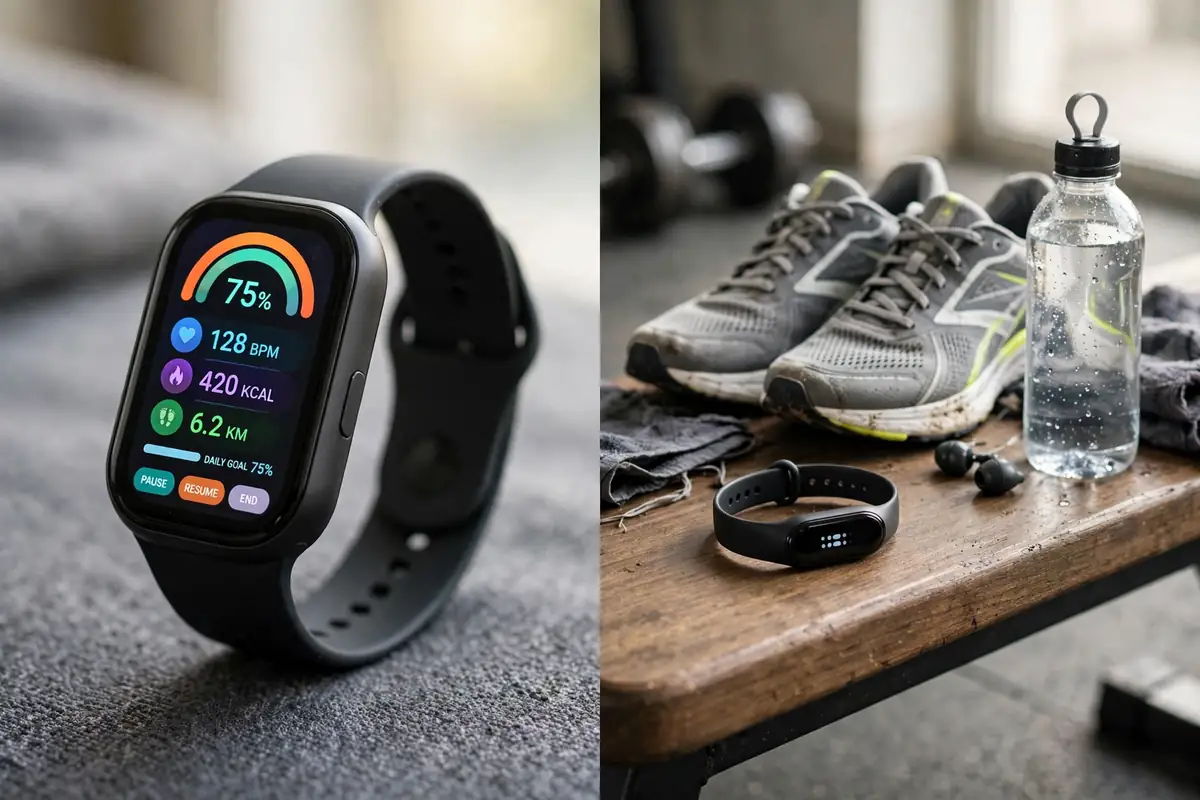
Wearable tech has split into two clear camps, and shoppers often stand in the store wondering which one they actually need. The smartwatch vs fitness tracker decision comes down to what you want on your wrist: a mini smartphone that also tracks workouts, or a focused health band that disappears until you check your stats. This comparison breaks down the differences so you can buy once and wear it happily every day.
The Quick Answer
Choose a fitness tracker if your main goals are steps, workouts, sleep, and heart rate at the lowest price with the longest battery life. Choose a smartwatch if you also want apps, calls and texts from your wrist, contactless payments, music storage, and a larger, brighter screen. Both track activity well; they differ in everything wrapped around that tracking.
What Each Device Does Best
A fitness tracker is a specialist. Slim bands from lines like Fitbit’s trackers or Garmin’s vivosmart focus on health metrics, weigh almost nothing, and suit people who wear a traditional watch or prefer nothing bulky during workouts and sleep. Their simplicity is the appeal, and many athletes building a routine around facilities like the Inwood Sports Complex find a light band all they need.
A smartwatch is a generalist. Models like the Apple Watch and Samsung Galaxy Watch run full app stores, answer calls, reply to messages, and stream music without your phone nearby on cellular versions. If your wrist needs to double as a communication hub, the smartwatch is the only real choice.
Health and Fitness Features Compared
Both categories track steps, distance, calories, heart rate, and sleep stages, and both offer GPS either built in or through your phone. The gap appears in advanced sensors. Smartwatches more often include ECG apps, blood oxygen readings, skin temperature trends, and fall or crash detection. Premium trackers have closed much of this gap, but smartwatches still tend to launch new health features first.
Treat all of these readings as trend information, not medical diagnosis. A wearable that shows your resting heart rate drifting upward can prompt a useful conversation with your doctor, especially alongside the broader wellness habits described in our guide to holistic healthy living. Sleep tracking deserves the same perspective: consistent schedules matter more than any single night’s score, a point echoed in our article on how daily habits affect mental health.
Stress and Recovery Tracking
Many wearables now estimate stress and recovery using heart rate variability. These scores can help you notice patterns, such as poor sleep after late workouts or stressful workdays. Used lightly, they support the kind of balanced routine promoted by resources like GoldenGoalPress health and wellness. Just avoid letting a morning score dictate your mood; how you feel still counts.
Battery Life: The Biggest Daily Difference
Battery life is where trackers win decisively. A typical fitness band runs five days to two weeks per charge, so sleep tracking is effortless. Most full smartwatches need charging every one to two days, which means planning around the charger and sometimes skipping sleep data.
There are exceptions on both sides. GPS-heavy sports watches last much longer than fashion smartwatches, and feature-packed trackers with bright screens drain faster than basic bands. Think honestly about your tolerance: if nightly charging annoys you, a tracker or a long-life sports watch will make you happier, no matter how impressive the smartwatch demo looked.
Payments, Apps, and Everyday Convenience
Contactless payment is the smartwatch feature people use most. Paying with a tap of the wrist uses the same tap-to-pay systems explained in our look at digital payment wallets, and it is genuinely handy at grocery checkouts and transit gates. Some trackers offer payments too, but support is narrower.
Apps follow the same pattern. Smartwatches run weather, maps, podcasts, and smart home controls, tying into ecosystems like the smart home devices many homes now run. Trackers keep software minimal on purpose. For the story behind the payments and platforms connecting these devices, our explainer on fintech and financial technology is a helpful backdrop.
Comfort, Style, and Durability
A tracker nearly vanishes on the wrist, which is why so many people prefer one for sleep. Smartwatches are larger and heavier, though they win on style, with metal cases, swappable bands, and watch faces that suit an office. Screen visibility outdoors also favors smartwatches.
Durability is comparable at similar prices. Look for water resistance rated for swimming if you train in the pool, and consider how easily bands and chargers can be replaced. Community training programs, like those at the Maplezone Sports Institute, often see both styles on athletes’ wrists, proof that fit and comfort beat brand debates.
Price: What You Get at Each Level
Basic trackers are the cheapest way into wearable tech, often costing well under a premium smartwatch. Smartwatches range from mid-priced models to luxury territory, and cellular versions add a monthly carrier fee. Remember the hidden costs: replacement bands, chargers, and in some ecosystems, subscriptions for advanced health insights.
For goal-driven training support, the motivation angle matters as much as hardware. Articles like our feature on elevating your athletic journey show how tracking habits keep people consistent. A device you wear daily beats a powerful one left in a drawer, whatever the price.
Smartwatch vs Fitness Tracker: Who Should Buy Which?
- Buy a fitness tracker if: you want steps, workouts, and sleep tracked simply; you hate frequent charging; you prefer a slim, light band; or your budget is tight.
- Buy a smartwatch if: you want calls, texts, and apps without reaching for your phone; you use contactless payments daily; you like a big, bright display; or you want the newest health sensors and safety features like fall detection, which can also support the peace of mind discussed in resources on mental health care and support.
- Consider a sports watch if: serious training metrics and multi-day GPS matter more than apps.
Subscription Plans and Hidden Costs
Some brands sell their best health insights behind a monthly membership. The device may look affordable on the shelf, yet the full experience costs more over a year or two. Before buying, check which features are free forever, which need the subscription, and whether you would honestly pay for them after the trial ends. Competing ecosystems handle this differently, and switching brands later usually means leaving your history behind, so the ecosystem choice matters almost as much as the hardware itself.
Replacement parts are the other quiet expense. Proprietary chargers are easy to lose and not always cheap to replace, while standard cables keep life simple. Bands wear out too, especially silicone ones used for daily workouts and swimming. Budgeting for these small items upfront, the way you would for any ongoing household cost, prevents the irritation of a dead device waiting on a mail-order cable. Runners training for events covered by outlets like the BB Owen sports facility community often keep a spare charger in their gym bag for exactly this reason.
How to Decide in the Store
If you are torn between the two, run a quick honest test. List the three things you want the device to do every day. If two of them involve communication, payments, or apps, lean smartwatch. If all three are health and training, lean tracker. Then try both styles on your wrist for a minute: the one you forget you are wearing is usually the one you will still be wearing in six months. Comfort, battery, and simplicity win far more often than spec sheets do.
Frequently Asked Questions
Can a fitness tracker answer calls and texts?
Most trackers can show notifications and sometimes quick replies on Android, but they generally cannot take calls or run full messaging apps. Smartwatches handle both.
Do I need my phone nearby for GPS tracking?
Many wearables now include built-in GPS. Budget trackers may borrow your phone’s GPS instead, which works fine as long as you run or ride with your phone.
Are wearable health readings accurate?
They are good for trends and general awareness, especially heart rate during steady exercise. They are not medical devices, so confirm anything concerning with a professional.
Which lasts longer before needing replacement?
Battery wear decides this more than brand. Trackers’ simpler software tends to age gracefully, while smartwatches may feel slow sooner as apps grow heavier. Either can serve for years with normal care.
One last practical tip: buy from a retailer with an easy return window and wear the device for a full week, including workouts and sleep, before deciding. Wrists differ, sleep habits differ, and a week of real life tells you more than any comparison chart about which style you will keep using happily.
The Bottom Line
In the smartwatch vs fitness tracker matchup, there is no universal winner, only a better fit for your routine. Trackers deliver focused health tracking, tiny size, and week-long battery at low prices. Smartwatches add communication, payments, and apps at the cost of size, price, and daily charging. Pick the one that matches how you actually live, and you will still be wearing it long after the novelty fades.